For patients and familiesPara pacientes e familiares
Understanding, in plain languageEntender, em linguagem simples
What Ebstein anomaly is, what the cone repair tries to do, and how to prepare questions for the people who actually know your case: your congenital heart team.O que é a anomalia de Ebstein, o que o reparo em cone tenta fazer e como preparar perguntas para quem realmente conhece o seu caso: a sua equipe de cardiopatias congênitas.

If someone has severe chest pain or trouble breathing right now, has fainted, is confused, or looks blue or gray, call emergency services immediately: 911 in the United States, 192 in Brazil. This page is educational and does not replace your medical team.
What Ebstein anomaly is
The heart has four valves. The tricuspid valve sits between the two right-side chambers. In Ebstein anomaly, a condition present from birth, the leaflets of this valve are attached lower than normal and are stuck to the wall of the heart, so the valve does not close well and blood leaks backwards. The right side of the heart can become enlarged. Some babies are very sick at birth; other people find out as children or adults. Every heart with Ebstein anomaly is a little different, which is why there is no single standard treatment for everyone.
UPMC publishes a page written for families: Ebstein anomaly institutional.
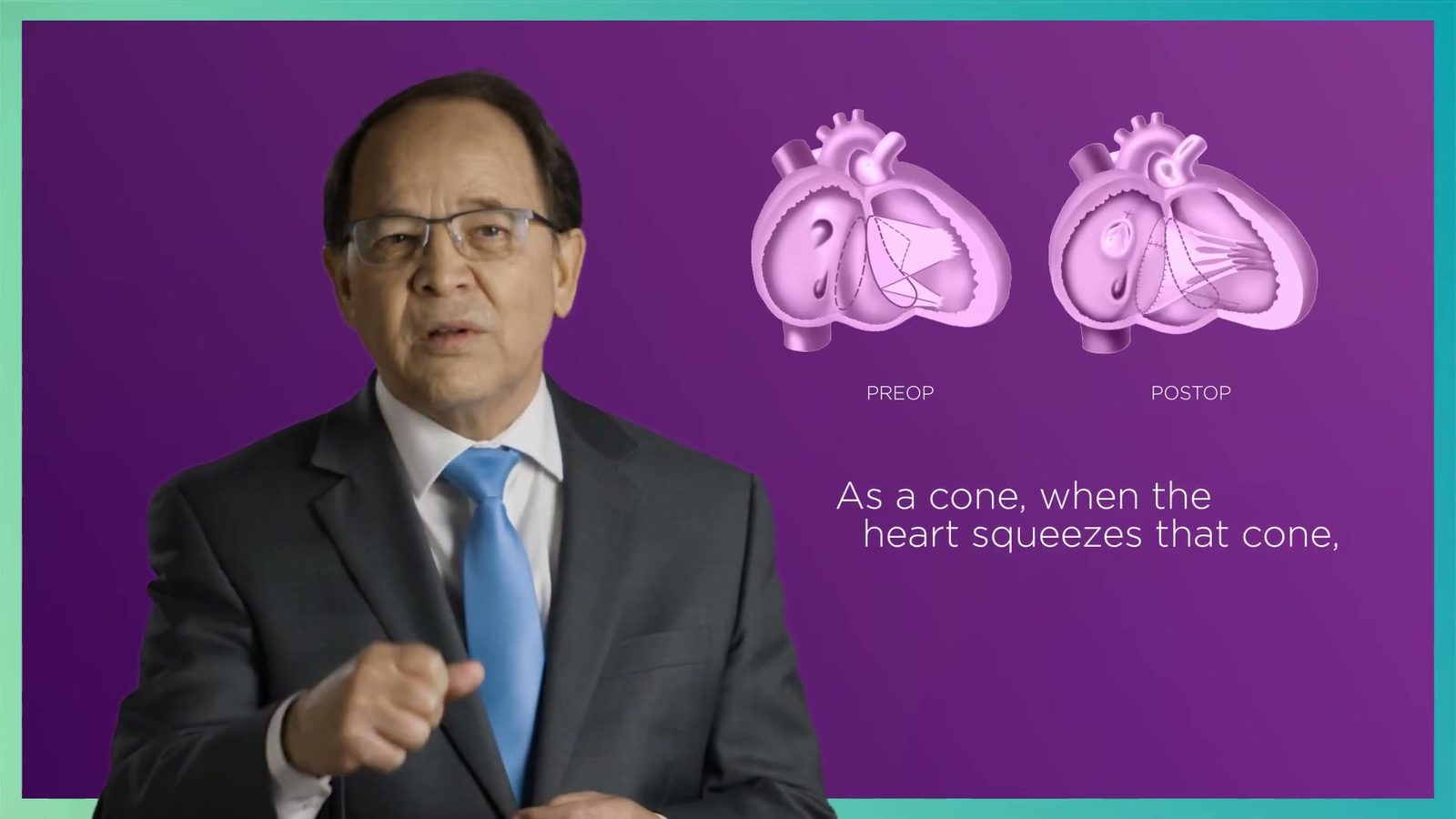
What the cone repair tries to do
Instead of replacing the valve with an artificial one, the surgeon frees the valve tissue that is stuck to the heart wall, shapes it into a cone that closes against itself, and attaches it back at the valve's natural ring. The aim is a valve made of the person's own tissue. Whether this is possible depends on the tissue available and on how the heart is working; that is something only the surgical team can judge after looking at the heart. Read more in The cone procedure or on the UPMC page about the cone procedure institutional.
Questions you may want to ask your medical team
- What does my (or my child's) valve look like, and how is the right ventricle working?
- What are the treatment options for this anatomy, and what does each one involve?
- Which tests are needed before deciding (echocardiography, cardiac MRI, rhythm assessment)?
- What follow-up will be needed afterwards, and for how long?
- What symptoms should make us call you right away?
- Could a second opinion be helpful, and how do we request one?
Consultations and second opinions
This portal does not book appointments and cannot say whether the center accepts a given patient, insurance plan or country, or what the waiting times and costs are. Those questions belong to the center's team. Use the Da Silva Center contact page institutional for consultation or second-opinion inquiries. See also Contact.
Questions families often ask
Is my child a candidate for the cone repair?
This portal cannot answer that for anyone. Candidacy depends on the valve anatomy, the heart function and the overall situation, and is decided by the treating congenital heart team after imaging and examination.
What is the success rate?
There is no single number that honestly answers this. Published studies report different things for different groups of patients: how well the valve closes, how the heart muscle works, symptoms, survival and the need for another operation. Your team can explain which studies apply to your situation.
Will one operation be enough?
The institutional page says that some patients may require more than one operation (Da Silva Center institutional). It depends on the individual case.
Can I read other families' stories?
UPMC publishes patient stories institutional. They are real experiences of other people and do not predict another person's result. This portal does not publish patient stories of its own.
Can the assistant on this site answer my medical questions?
It can explain terms and general concepts and help you write down questions, in English or Portuguese. It cannot diagnose, change medication or decide about surgery, and its answers are generated automatically and can contain errors. Please do not share personal health information with it.
Resumen en español
Esta página explica en lenguaje sencillo la anomalía de Ebstein y la técnica del cono para familias, y sugiere preguntas para el equipo médico. No ofrece diagnóstico ni indica si una persona es candidata a la cirugía: esa decisión corresponde al equipo de cardiopatías congénitas que la atiende. Para consultas y segundas opiniones, vea Contacto.
Questions? Ask the educational assistant.Dúvidas? Pergunte ao assistente educacional.
An AI assistant trained on the published research and the institutional pages listed on this site. It explains terms and helps you prepare questions for your medical team. It does not diagnose and does not book appointments. Its answers are generated automatically and can contain errors.Um assistente de IA baseado nas publicações e nas páginas institucionais listadas neste site. Ele explica termos e ajuda a preparar perguntas para a sua equipe médica. Não faz diagnóstico e não marca consultas. As respostas são geradas automaticamente e podem conter erros.